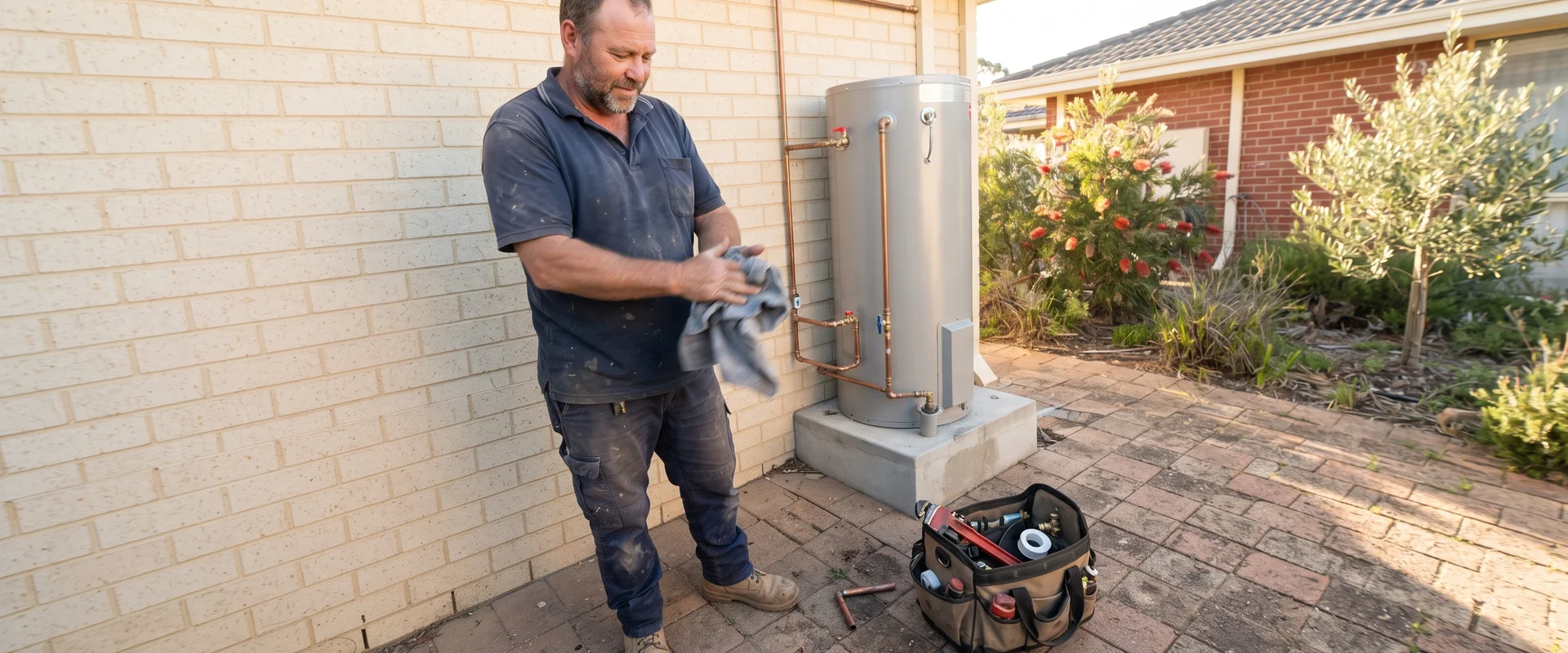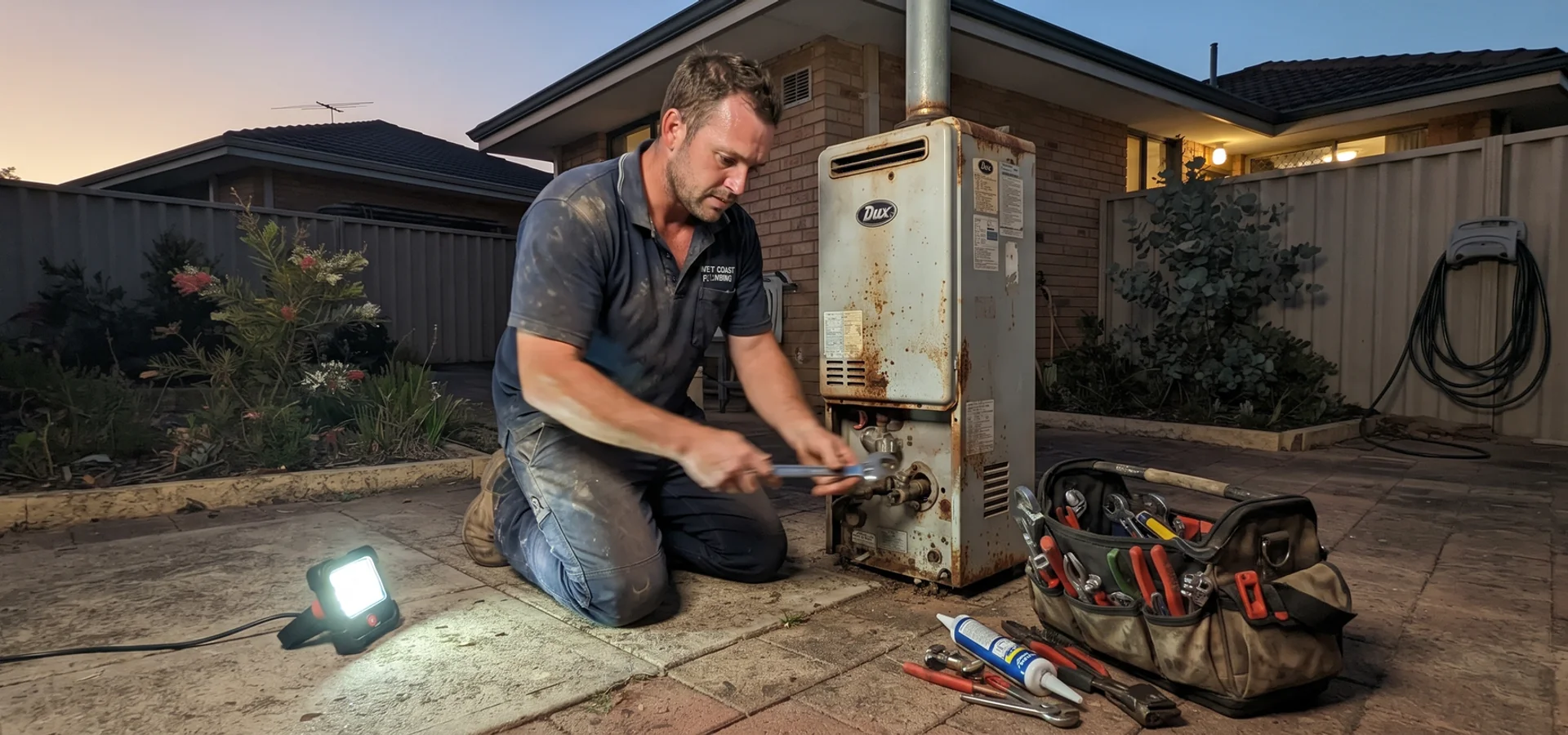
Repaired properly, replaced only when it’s genuinely time
We repair gas, electric, solar and heat pump hot water systems across Perth. Our licensed plumbers diagnose the actual fault, the element, thermostat, thermocouple or valve, before recommending anything, and carry the common parts on the truck so most repairs are finished in one visit.
If you have no hot water right now and it can’t wait, see 24/7 emergency hot water repairs instead. This page covers scheduled repairs and diagnosis for systems that are faulty, underperforming or due for a service.
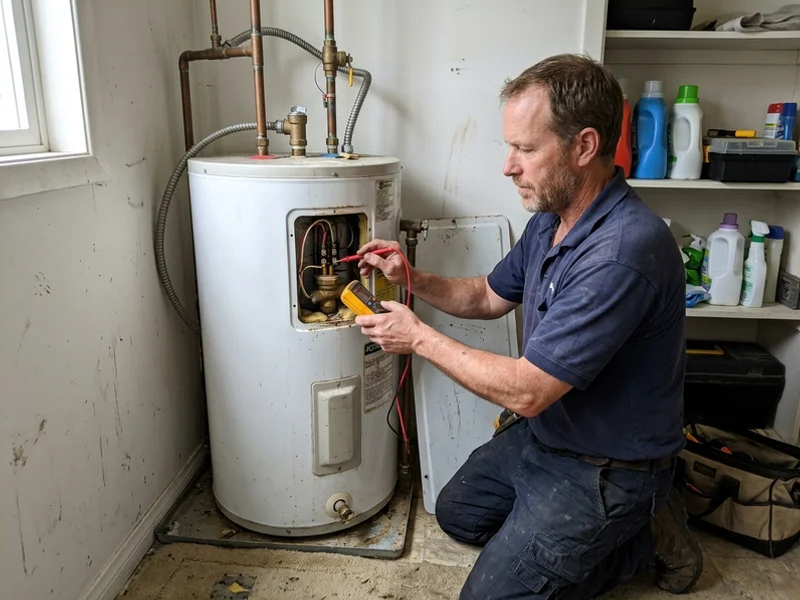
What we repair, by system type
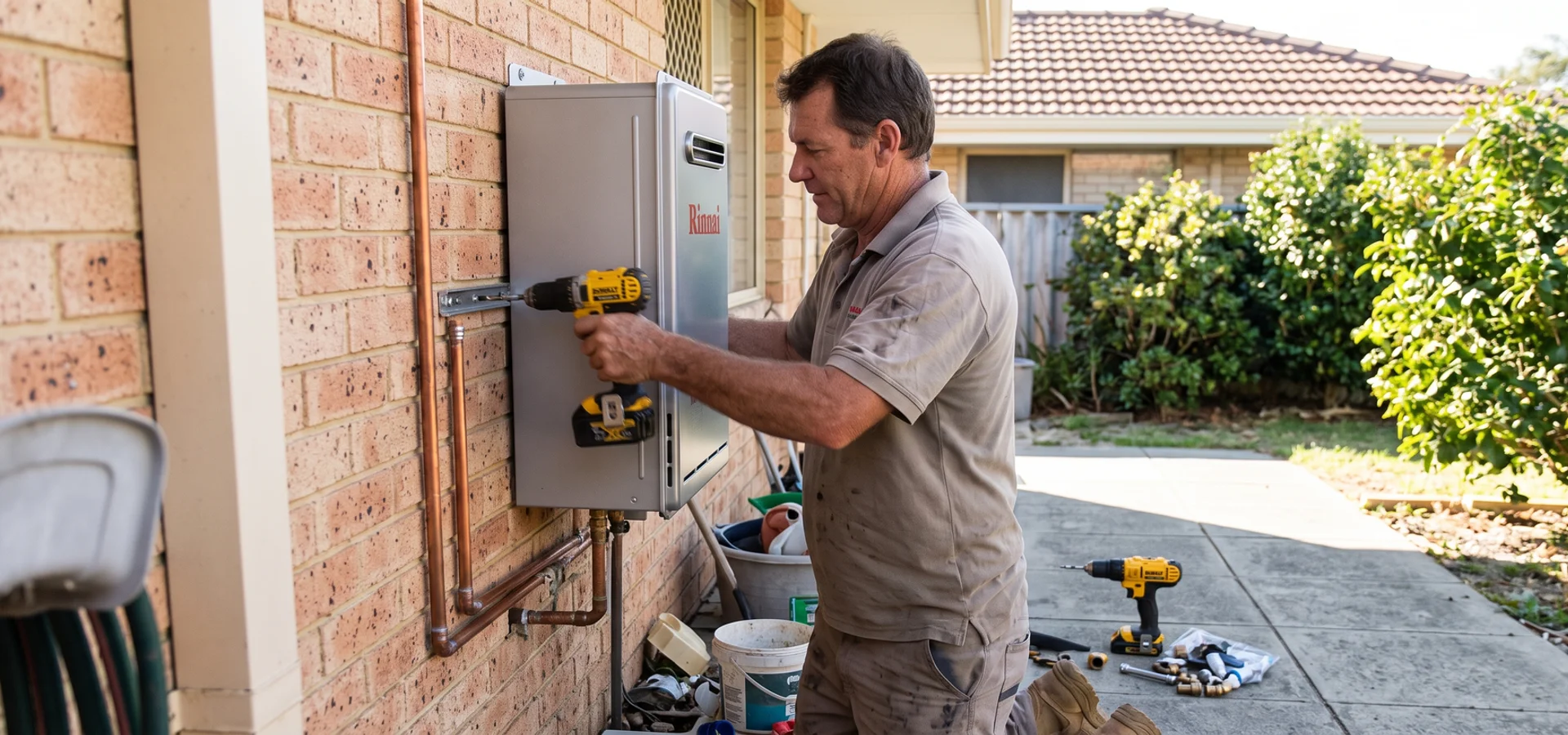
Gas hot water systems. Continuous flow and storage gas units, including faulty temperature and pressure relief valves, water pressure issues, overheating, gasket and connection leaks, loose heating element bolts, and noisy operation. See our gas hot water page for installation and full system details.
Electric hot water systems. Element and thermostat faults across instantaneous and storage models, all major brands. Full detail on electric hot water systems.
Solar hot water systems. Leaky or cracked panels, heat transfer leaks, thermistor and heat exchanger faults, clogged pipes and tanks, and filter or pump repairs. See solar hot water for how the systems work.
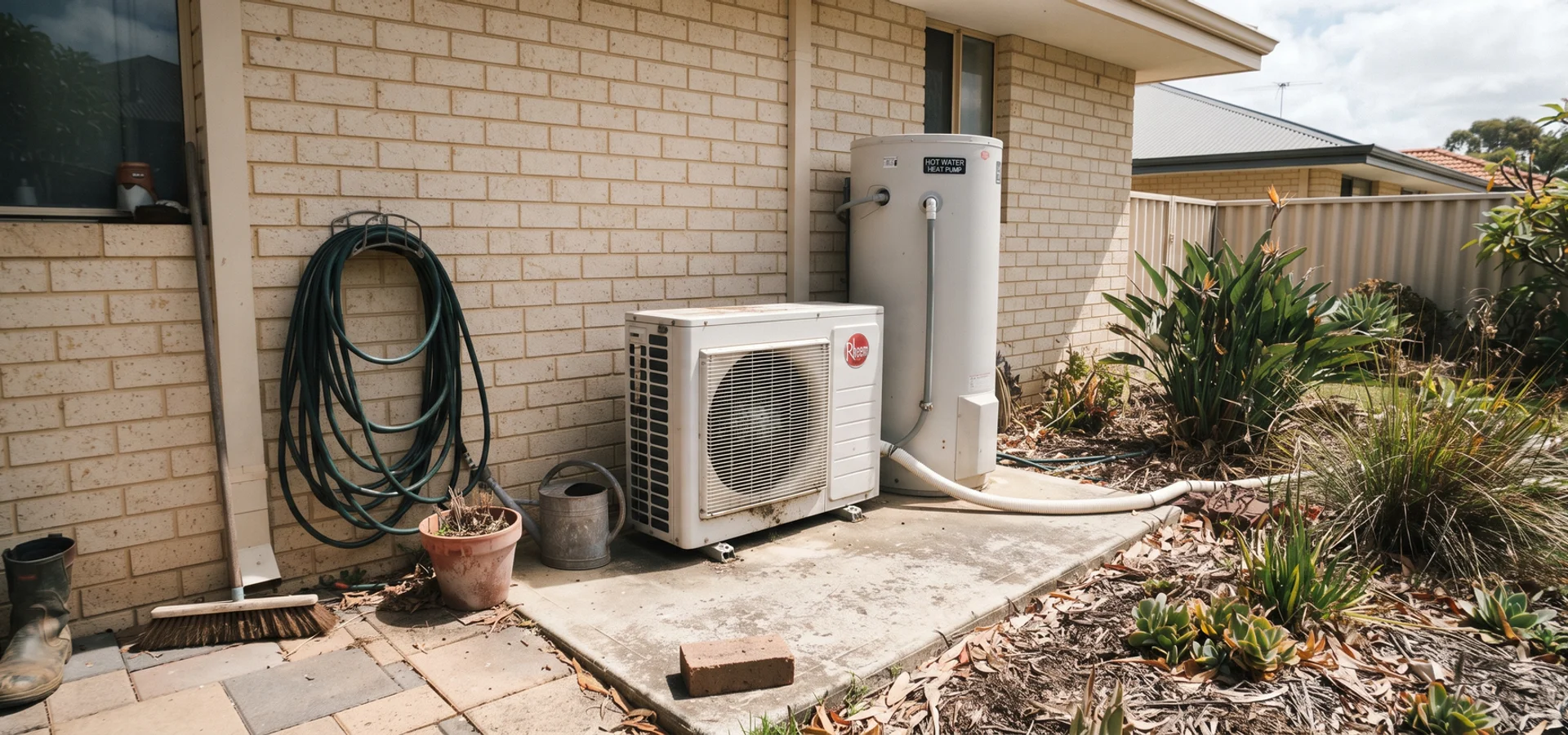
Heat pump systems. Thermostat, power, auxiliary element and noise diagnostics, repairs and maintenance. See heat pump hot water for full detail.
Repair or replace?
We always service a system first and only recommend replacement when it’s genuinely the better option. Hot water systems wear out from ordinary use, the thermocouple, elements, thermostats, sacrificial anode and relief valves are all consumable parts that can leak, corrode or fail on their own without the tank itself needing to go.
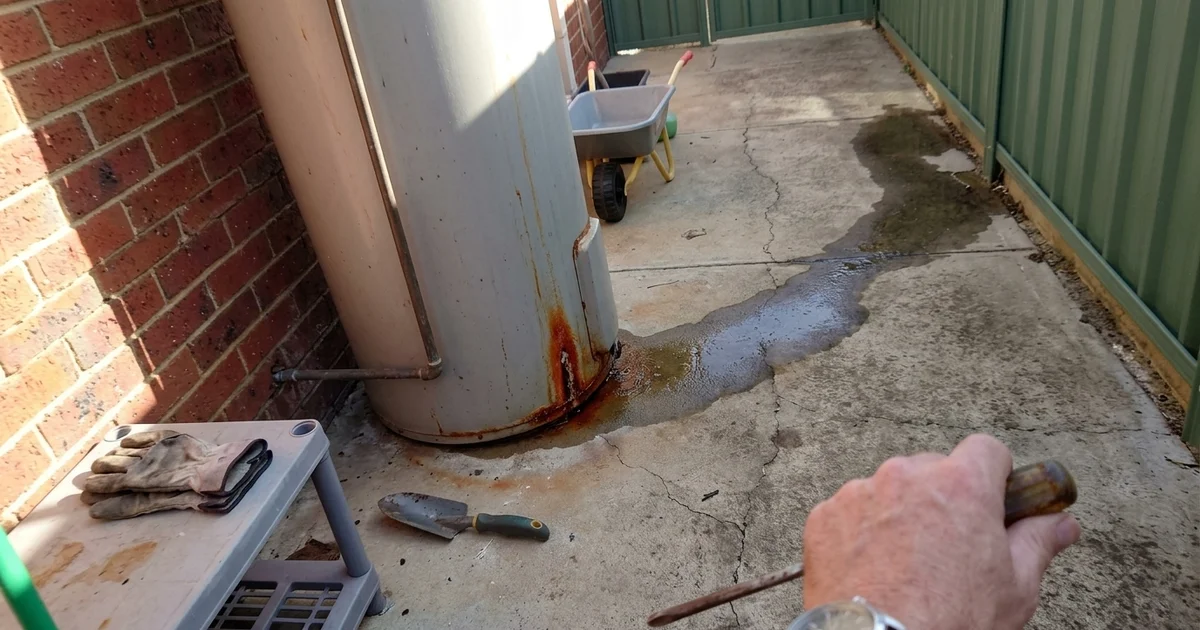
A few things are worth weighing up. If your system is new, it’s almost always worth repairing. If it’s leaking from the tank itself, or several years old with a history of faults, replacement is usually the wiser call. Most insurers recommend replacing a hot water system every 10 years or less, and an old unit that’s already damaged may not be covered. The manufacture date is printed on the compliance label if you’re not sure how old yours is. If you’re in an apartment, check with your strata first, as they often have their own requirements. Our guide on repair vs replacement goes through this in more depth, and signs your system needs replacing is worth a read if you’ve had more than one fault this year.
What causes a hot water system to deteriorate
Corrosion inside the tank. Storage tanks include a sacrificial anode, usually magnesium, that corrodes instead of the steel cylinder. Once it’s spent, the tank itself starts corroding. Check it isn’t fully covered in sediment or worn thin, and plan on replacing it every 5 to 10 years, more often in hard water areas like Perth.
Water temperature. Water in the tank should not drop below 60°C, which is what kills bacteria such as legionella. Water delivered to the tap should not exceed 50°C, the Western Australian regulation that prevents scalding. Running outside this range either promotes bacterial growth or accelerates heat stress, corrosion and scale, all of which shorten the system’s life. See our WA hot water regulations guide for the full detail.
Hard water and scale. As water heats, dissolved minerals solidify into scale that coats heating elements and burners. The thermostat keeps calling for heat, the element or burner works harder to compensate, and it overheats and wears out faster than it should. Regular servicing catches this before it causes a breakdown.
Contact our team for a free quote, and we’ll get your hot water back on track.