The cheapest hot water to run, without touching your roof
Heat pump hot water is one of the most energy-efficient options available to Perth homes. It draws warmth from the surrounding air to heat your water, which slashes running costs against a conventional electric element. We install high-CoP systems from iStore, Reclaim Energy and Sanden, check placement and solar PV timer integration, and process the federal STC rebate to lower your upfront price.
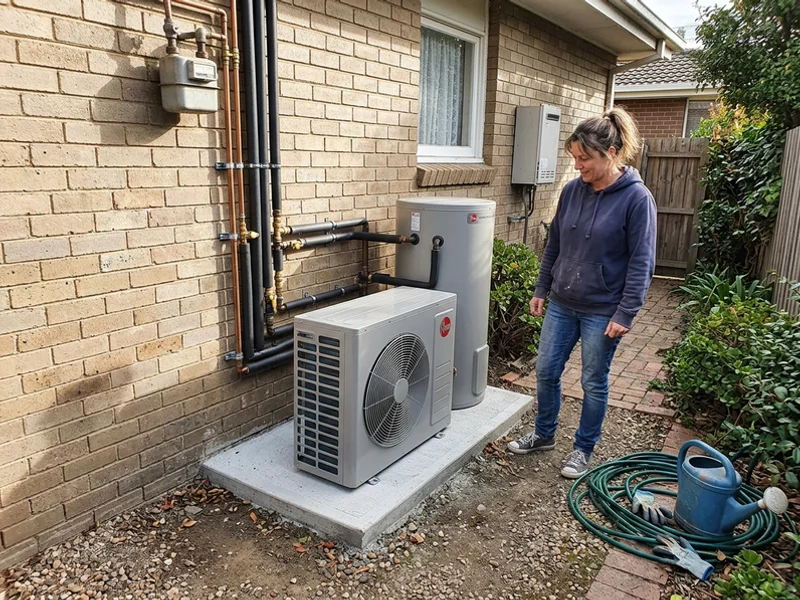
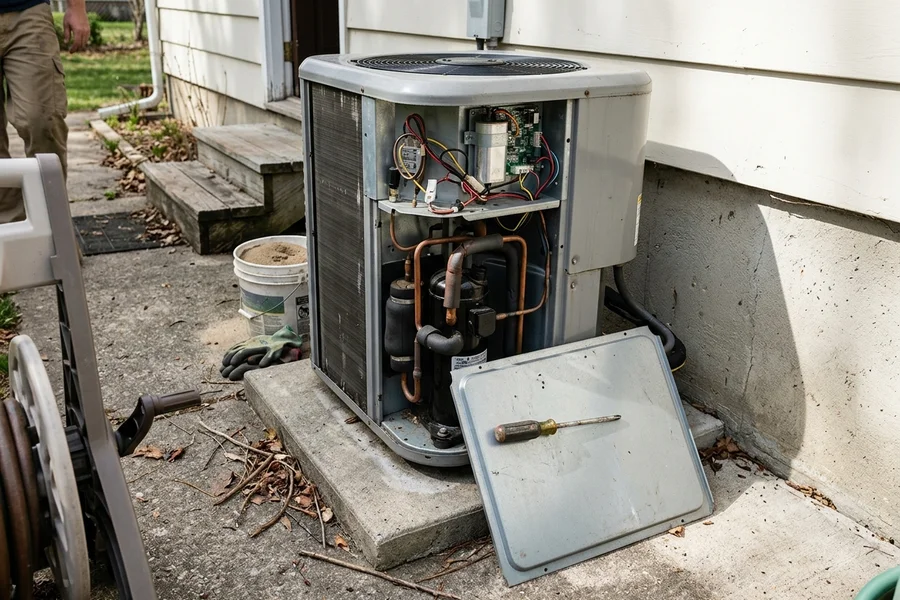
The technology is a refrigeration cycle running in reverse. A fan pulls ambient air across an evaporator, refrigerant absorbs heat from that air, and a compressor raises the temperature so it can be transferred into the tank. Because the system is moving existing heat rather than generating it, its Coefficient of Performance (CoP) is typically three or more. In plain terms, one unit of electricity in produces around three units of heat out, where a conventional element manages one for one.
Why it suits Perth specifically
Perth’s mild winters sit comfortably inside the efficient operating range of modern heat pumps, which is why we recommend them so often across our hot water system Perth callouts. The units we install use R290 or CO2 (R744) refrigerant, both of which hold their efficiency well on cold mornings. Every unit carries an electric element as a backup for extreme conditions, and here it rarely engages.
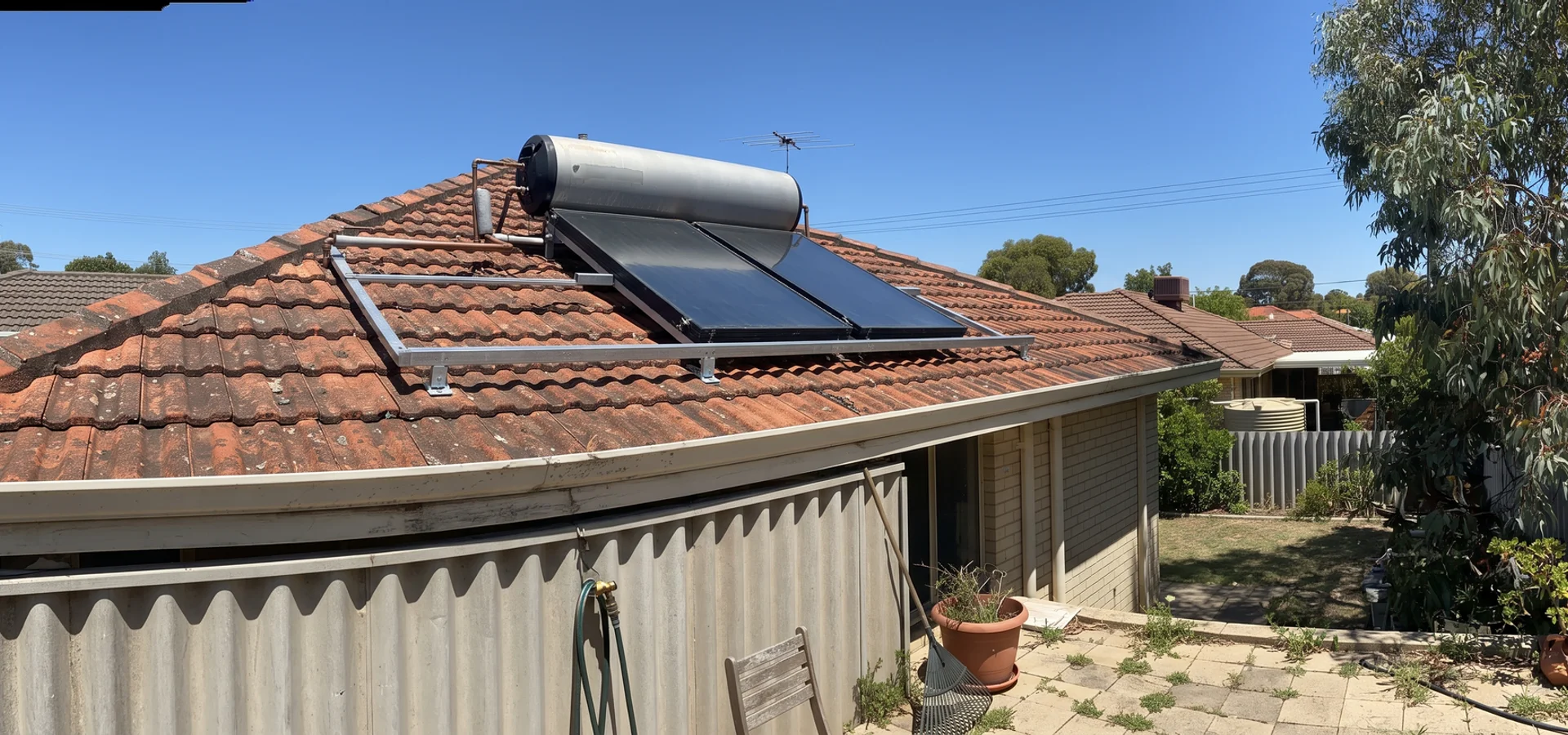
The other Perth-specific advantage is roof independence. Solar thermal hot water is excellent, but it needs unshaded north-facing roof area, and a growing number of homes have that space filled with PV panels. A heat pump sits on the ground, needs no collectors, and does not care what your roof looks like. If you already have PV, we time the heating cycle to run during your generation window, which means most of the electricity it uses is yours rather than the grid’s.
Placement is the decision that matters
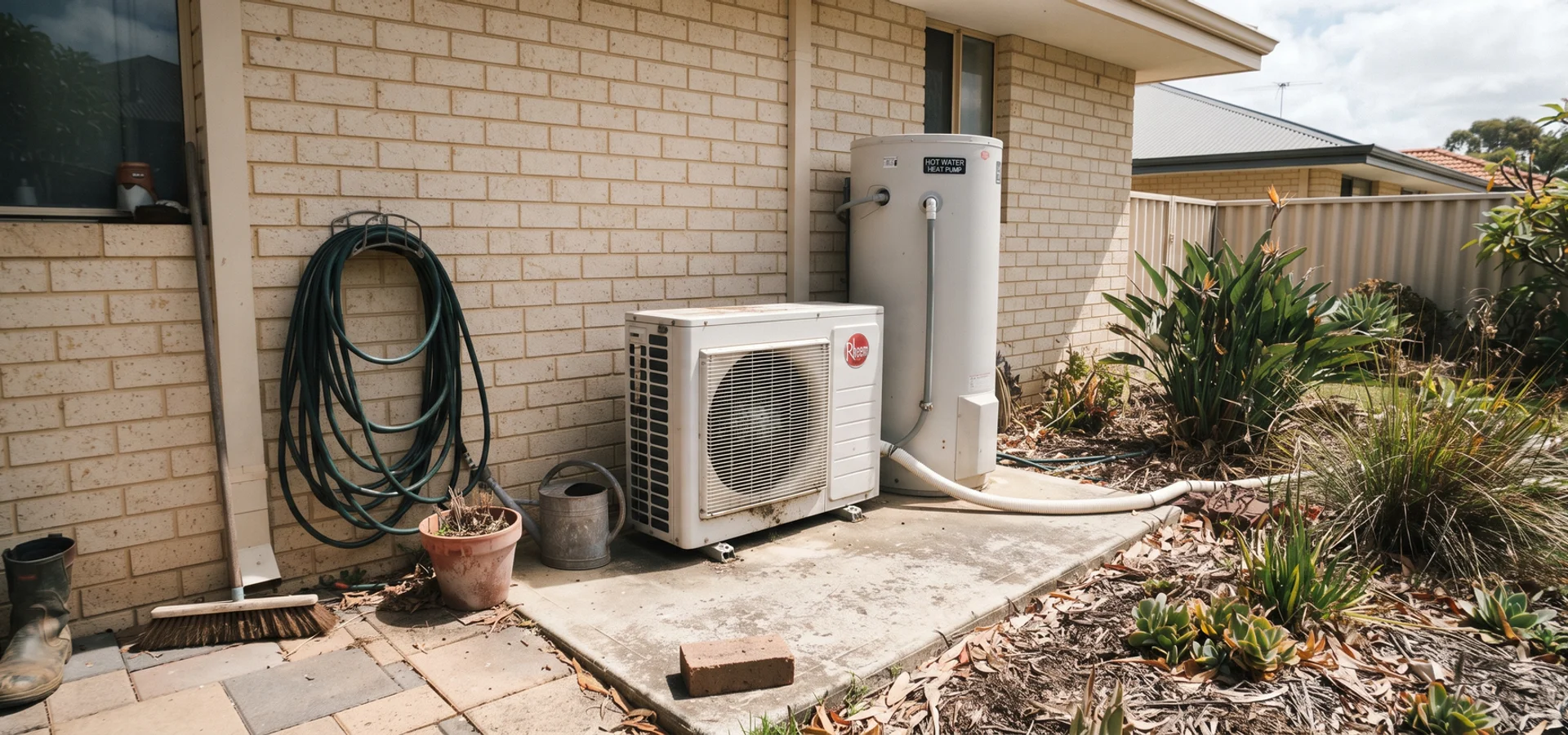
The single biggest cause of regret with a heat pump is placement. The unit needs clear airflow to both the intake and exhaust, a level base, and a sensible route for condensate to drain. It also makes a low fan and compressor hum while heating, similar to an outdoor air conditioner. Put it under a bedroom window and you will notice it. Put it on the opposite side of the house with clear air around it and most people forget it exists.
We assess this before quoting, not after installing. Where the obvious spot is the wrong one, we cost the pipework to relocate it properly.
Rebates and what you actually pay
Western Australia has no state hot water rebate, but the federal Small-scale Technology Certificate scheme applies to eligible heat pump systems on the Clean Energy Regulator’s register. In practice that is a point-of-sale discount, typically $800 to $1,500 or more depending on the model’s deemed savings. We create and claim the certificates as part of the job, so the reduction shows up in your quoted price rather than as paperwork you have to chase.
Installed systems run from around $2,500 to $5,500 before the rebate. After it, an entry-level heat pump often costs about the same as a decent electric storage tank while using roughly a third of the energy for the next decade.
For the detail, read how heat pump hot water systems work, the current WA heat pump rebate and STC rules, and our heat pump versus solar comparison.