Solar hot water suits Perth better than almost anywhere
Perth’s sunshine makes solar hot water a genuinely smart, eco-friendly choice. We install and repair roof-mounted close-coupled and split solar systems with gas or electric boosting, on brands including Solahart, Edwards and Chromagen. We check your roof, your boosting needs and your STC rebate eligibility, then quote it all up front.
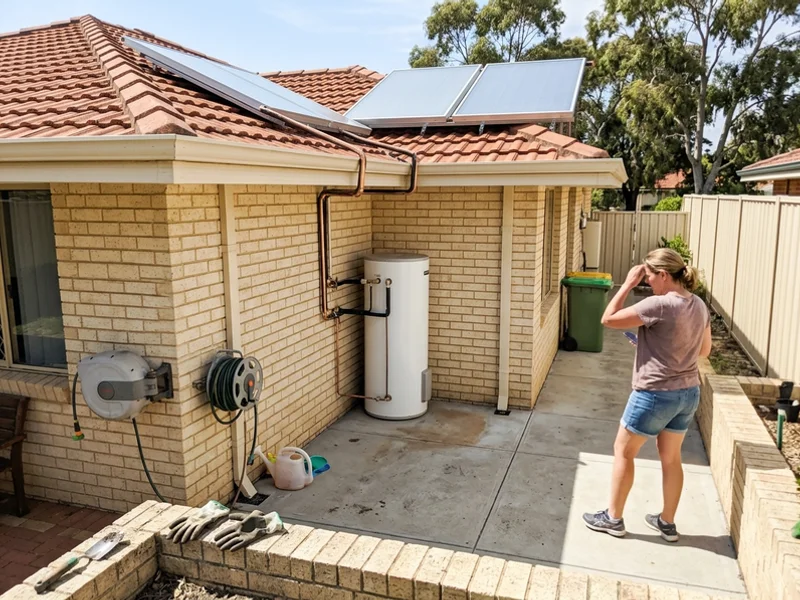
The principle is simple, and it is the most passive of the hot water system Perth options we install. Collectors on the roof absorb solar radiation and transfer that heat into water, which is stored in an insulated tank. A booster covers the gap when the sun has not delivered enough, which in Perth means cloudy winter stretches and days when demand spikes. Because water heating is roughly a quarter of a typical household’s energy bill, shifting most of that load onto free sunshine changes the bill noticeably.
Close-coupled, split, flat plate and evacuated tubes
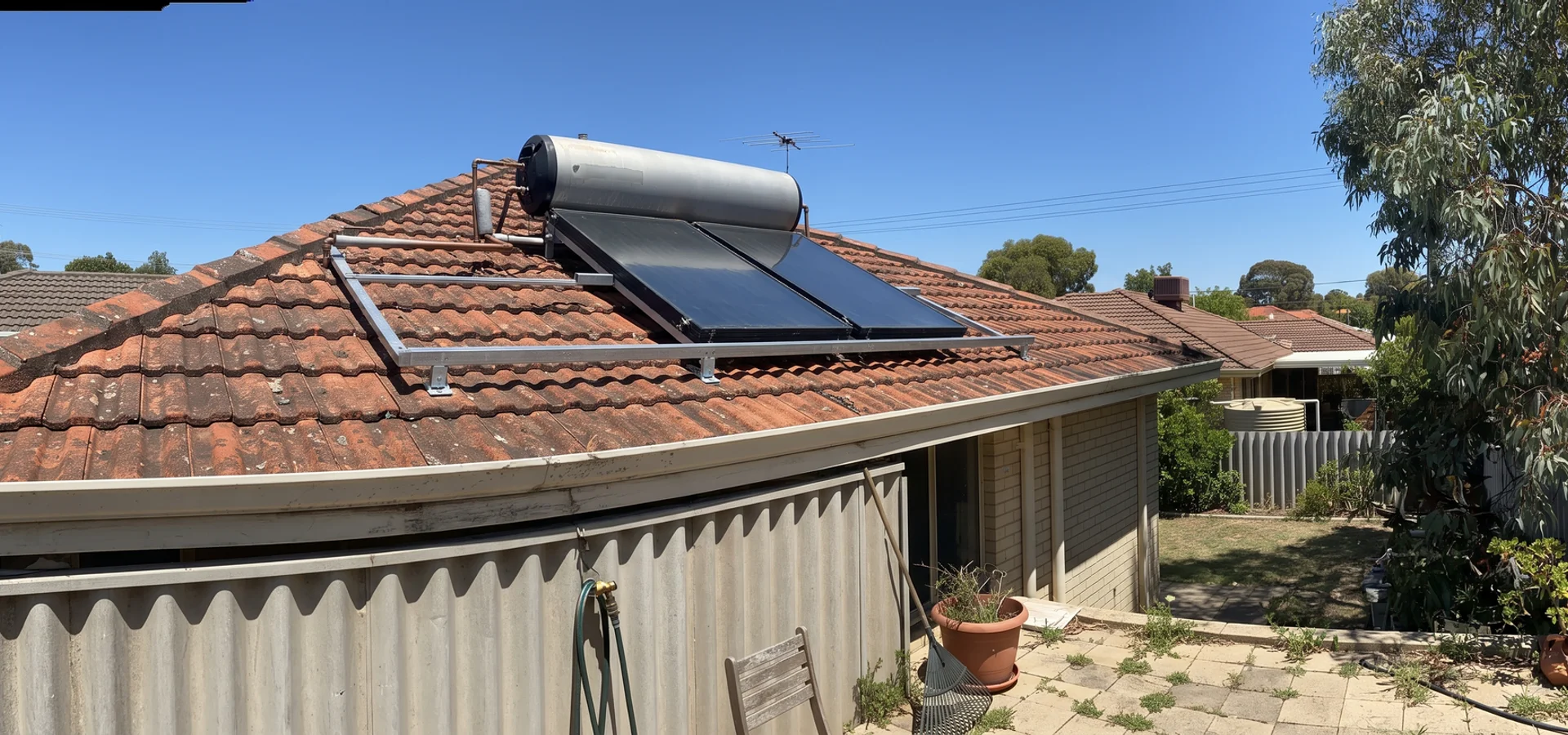
Close-coupled thermosiphon systems put the tank directly above the collectors on the roof. Hot water rises naturally, so there is no pump and no controller to fail. Simplest and cheapest to install, but it puts real weight up high, which not every Perth tile roof should carry.
Split systems keep the tank at ground level and use a small pump and controller to circulate water up to the collectors and back. They cost more, but the roof only carries the collectors, servicing is far easier, and the tank is out of the weather.
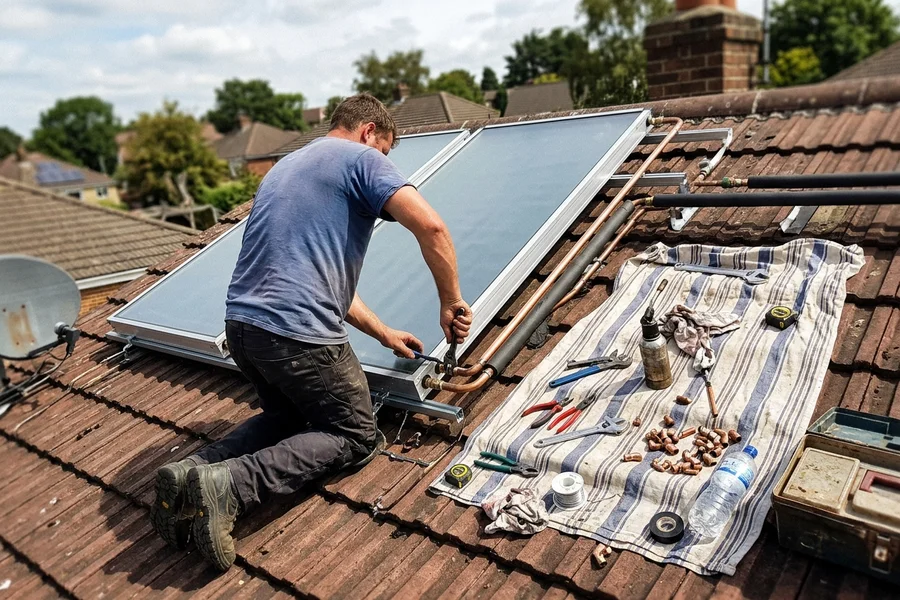
Flat plate collectors are the traditional choice: robust, cost-effective and well suited to Perth’s climate. Evacuated tubes perform better on cold mornings and in shoulder seasons because each tube is individually insulated, and they suit properties in the hills or outer east where overnight temperatures drop further.
Boosting: gas or electric
Every solar system needs a booster. If you have mains natural gas, a gas booster is usually cheaper to run and fires quickly. Without mains gas, an electric booster is the answer, and it can be set to run on an off-peak tariff so top-up heating happens at the cheapest rate.
The mistake we see most is a booster set to run far too eagerly, effectively turning an expensive solar system into an ordinary electric one. Correct commissioning matters, and it is something we check on every service.
What we repair on existing solar systems
Circulation pumps and controllers on split systems, failed boosters, leaking collector connections, seized frost protection valves, and the sacrificial anode rod in the tank. Perth’s hard water is unkind to anodes, and a spent one leads to a corroded tank far earlier than the collectors’ service life would suggest.
What solar hot water costs in Perth
Installed systems generally run from around $2,500 for a basic close-coupled setup up to $6,500 for a premium evacuated tube system, before rebates. Western Australia has no state rebate, but federal Small-scale Technology Certificates typically take $800 to $1,500 or more off an eligible system at point of sale. We create and claim the certificates so the discount lands in your quoted price.
If you are still weighing options, read how solar hot water works in Perth’s climate, then is solar hot water worth it in Perth for the payback maths, and heat pump versus solar if roof access is the sticking point.