Why boosting exists
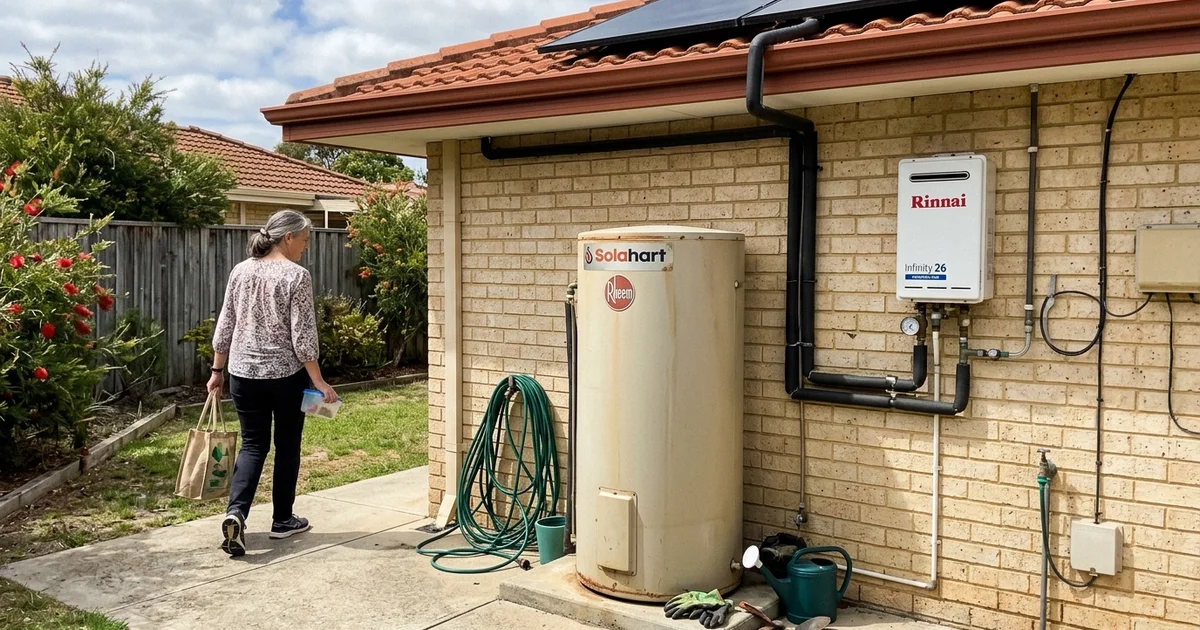
Solar hot water depends on the sun, and the sun does not run to your shower schedule. Cloudy days happen. Winter days are short. Sometimes you have guests and use twice the usual hot water in an evening.
The booster covers those gaps. It is a gas burner or an electric element that heats the tank when solar input alone has not brought it to temperature. Every solar hot water system has one, and it is not an optional extra — see how solar hot water works in Perth for where it sits in the system.
The question is which type, and how it is configured.
Gas versus electric boosting
| Gas booster | Electric booster | |
|---|---|---|
| Requires | Mains natural gas or LPG | Standard electrical supply |
| Running cost | Lower on mains natural gas | Higher on peak, competitive on off-peak |
| Speed | Fast recovery | Slower recovery |
| Off-peak option | No | Yes |
| Install complexity | Higher, licensed gas fitting | Lower |
| Blackout behaviour | Some units need power for controls | Does not operate |
| Typical setup | In-line unit or tank-mounted burner | Element inside the tank |
Gas boosting is generally the cheaper option to run where you have mains natural gas, and it recovers the tank quickly. It is usually configured either as an in-line continuous flow unit that fires only when solar-heated water arrives below the target temperature, or as a burner integrated into the tank.
The in-line arrangement is elegant: water leaves the solar tank, passes the gas unit, and if it is already hot enough the gas unit does nothing at all. If it is short, the unit lifts it the remaining distance. You only pay for the shortfall.
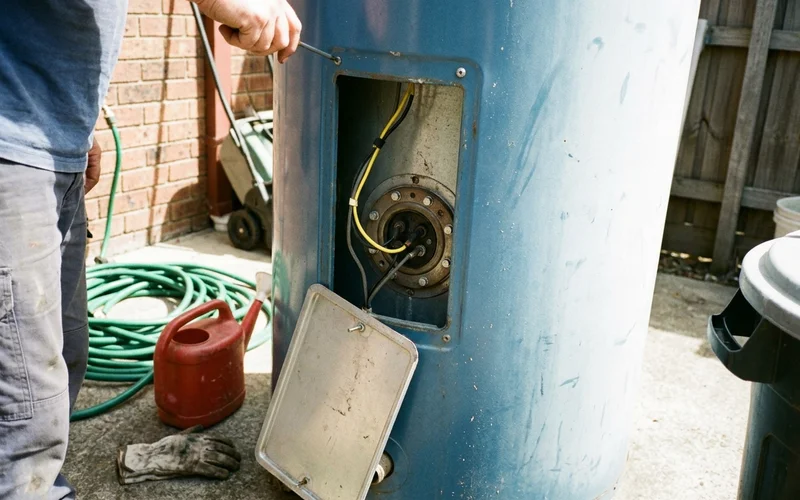
Electric boosting is simply an element inside the solar storage tank, similar to a conventional electric system. It is cheaper and simpler to install, requires no gas supply, and works anywhere.
Its main advantage is the off-peak option. On an off-peak circuit the booster fires overnight at the cheaper rate, so the tank starts the day at temperature.
The off-peak trap
There is a catch with off-peak electric boosting that deserves attention, because it undermines the whole point of the system if handled poorly.
If the booster fires at 1am and heats the tank to full temperature, then the sun comes up on a clear Perth day, there is nothing left for the solar collectors to contribute. The tank is already hot. You have effectively paid for electric hot water and let the collectors sit idle.
Good practice is a partial off-peak boost that lifts the tank enough to cover the morning but leaves headroom for solar gain during the day, or timing the boost for late afternoon rather than overnight so the day’s solar contribution is captured first.
This is a commissioning and configuration matter rather than an equipment one, and it is the single most common reason people tell us their solar system does not seem to save them anything.
Which should you choose?
You have mains natural gas. Gas boosting is usually the better answer. Lower running cost, fast recovery, and an in-line configuration means you only pay for the top-up you actually need.
You have no mains gas. Electric boosting, configured thoughtfully. Consider whether an off-peak circuit is available and worth the timing compromise.
You have rooftop PV. Electric boosting becomes more attractive, because you can time the booster to run during your generation window and use your own electricity rather than purchased power. That is a genuinely strong combination.
You are on LPG. Gas boosting still works but the running-cost advantage narrows considerably, since LPG costs more per unit of energy. Worth comparing against electric before deciding.
Checking your existing booster
If you already have solar and suspect the booster is doing too much of the work, a few things are worth checking:
- What time does it fire, and can that be adjusted?
- Is the tank thermostat set higher than necessary, forcing the booster on?
- Is the solar circulation pump or controller working, on a split system? A dead pump means no solar contribution at all and a booster carrying the entire load.
- Are the collectors shaded by trees that have grown since installation?
We service and repair solar systems across the Perth metro regardless of who installed them. See our solar hot water page for what we cover, or our gas hot water page if you are considering adding a gas booster to an existing solar setup.