First, work out what you have
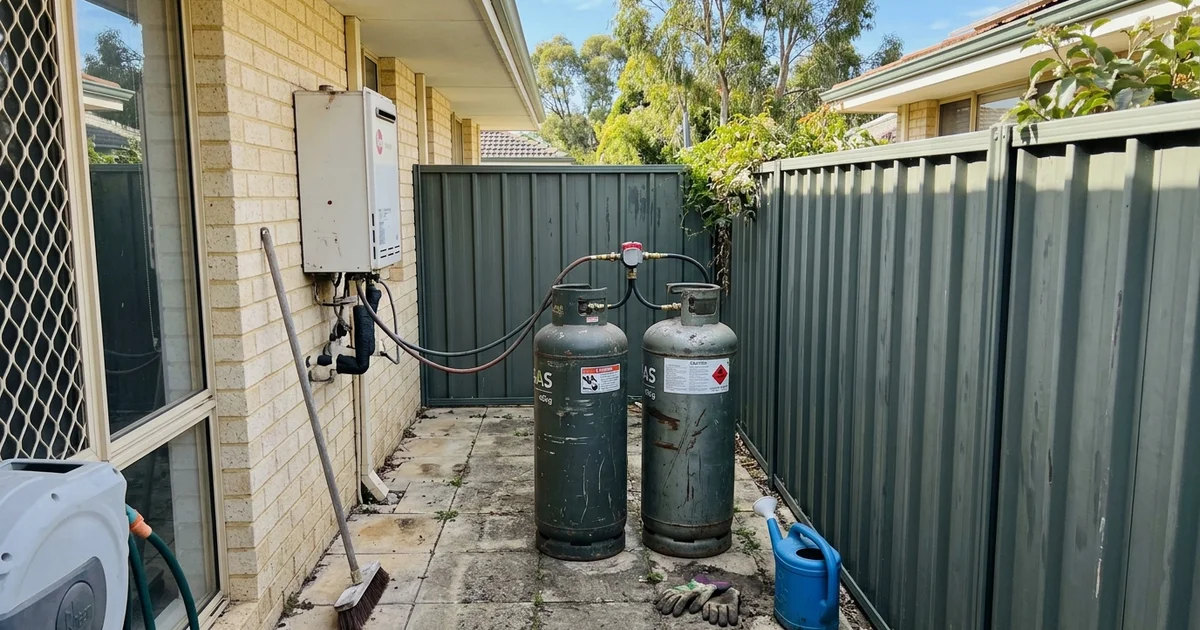
The quickest way to tell is to look at the side of your house.
Bottles mean LPG, liquefied petroleum gas, delivered in cylinders that either get exchanged or refilled in place. Usually two bottles with a changeover regulator so one takes over when the other empties.
A gas meter connected to a street main means natural gas, piped from the network.
Neither means you are on electric, and gas hot water is only an option if you fund a connection or go LPG.
This matters because it largely determines your options. Most of Perth’s established suburbs have mains natural gas available. Newer estates on the fringe, semi-rural blocks, and some parts of the hills are LPG or electric only. Once fuel is settled, the next decision is continuous flow versus gas storage.
How they compare
| Natural gas | LPG | |
|---|---|---|
| Supply | Piped from the street main | Bottles, exchanged or refilled |
| Running cost | Lower per unit of energy | Higher per unit of energy |
| Availability | Most established Perth suburbs | Anywhere |
| Running out | Never, continuous supply | Yes, if a bottle empties unnoticed |
| Ongoing admin | Billed with the meter reading | Bottle monitoring and delivery |
| Upfront connection | Connection fee if not present | Bottles and regulator only |
| Appliance compatibility | Different injectors and pressure to LPG | Different injectors and pressure to natural gas |
Natural gas is cheaper to run and requires no thought once connected. If it is available at your address and you are choosing gas hot water, it is the obvious choice.
LPG costs more per unit of energy and requires someone to notice when a bottle is getting low. It is not a compromise so much as a practical answer for properties the mains does not reach. LPG has a higher energy density than natural gas, which is why appliances need different injectors and operating pressures for each.
The appliance question
A gas hot water unit is built for one gas type or the other. The injectors are sized differently and the operating pressure differs, so you cannot simply connect an LPG unit to a natural gas line and expect it to work safely. It will either not fire properly or burn incorrectly.
Some units can be converted by a licensed gas fitter using a manufacturer conversion kit, which swaps the injectors and adjusts the pressure regulation. Whether that is possible depends on the specific model, and not all manufacturers offer a kit.
This is licensed work without exception. Incorrect injector sizing produces incomplete combustion, which is a carbon monoxide risk. If you are moving between gas types, we check the model first and tell you honestly whether conversion or replacement is the right path.
Connection details worth knowing
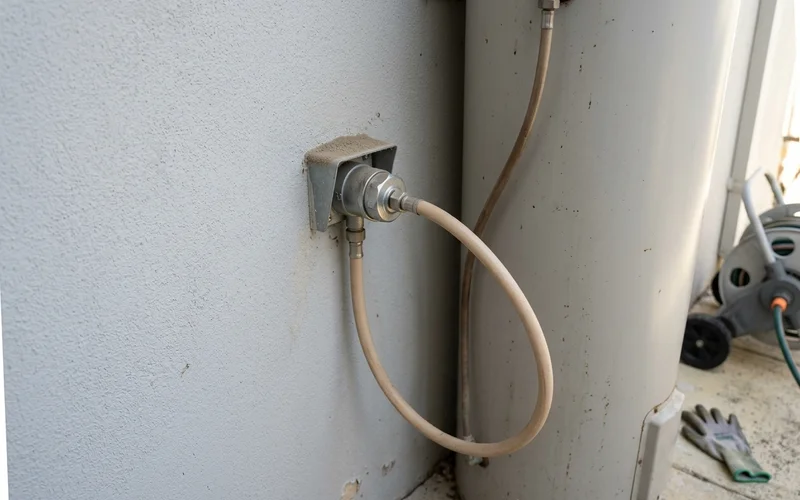
Gas bayonet. A quick-connect point commonly used for portable appliances and, in some installations, hot water connections. Convenient, but it needs to be the right type for your gas and correctly rated.
Regulators. LPG installations use a regulator, and twin-bottle setups use a changeover regulator so supply switches automatically when one bottle empties. That indicator on the regulator is worth glancing at occasionally.
Line sizing. Continuous flow units have a much higher peak gas demand than storage units, because they heat water instantly rather than gradually. Older properties sometimes need an upgraded gas line to support one, and on LPG the bottle size and regulator capacity need to match the appliance demand. We check this before quoting rather than discovering it on install day.
Clearances and flueing. Both gas types need correct clearances from windows, eaves and boundaries, and correct flueing where required. This is part of the compliance certificate we issue.
Making the choice
If mains natural gas is available at your property and you want gas hot water, connect to it. Lower running cost, no bottle management, no risk of running out mid-shower.
If it is not available, LPG works perfectly well for hot water and is a common setup across Perth’s outer areas. Size the bottles and regulator to the appliance, and keep an eye on the changeover indicator.
If neither is straightforward, it is worth pricing a heat pump alongside the gas option. It runs on electricity you already have, needs no gas infrastructure, and attracts the federal STC rebate.
We install and service both natural gas and LPG hot water across the Perth metro. See our gas hot water page for what is involved, or the hot water system installation page for the full range of options.