What a sacrificial anode actually does
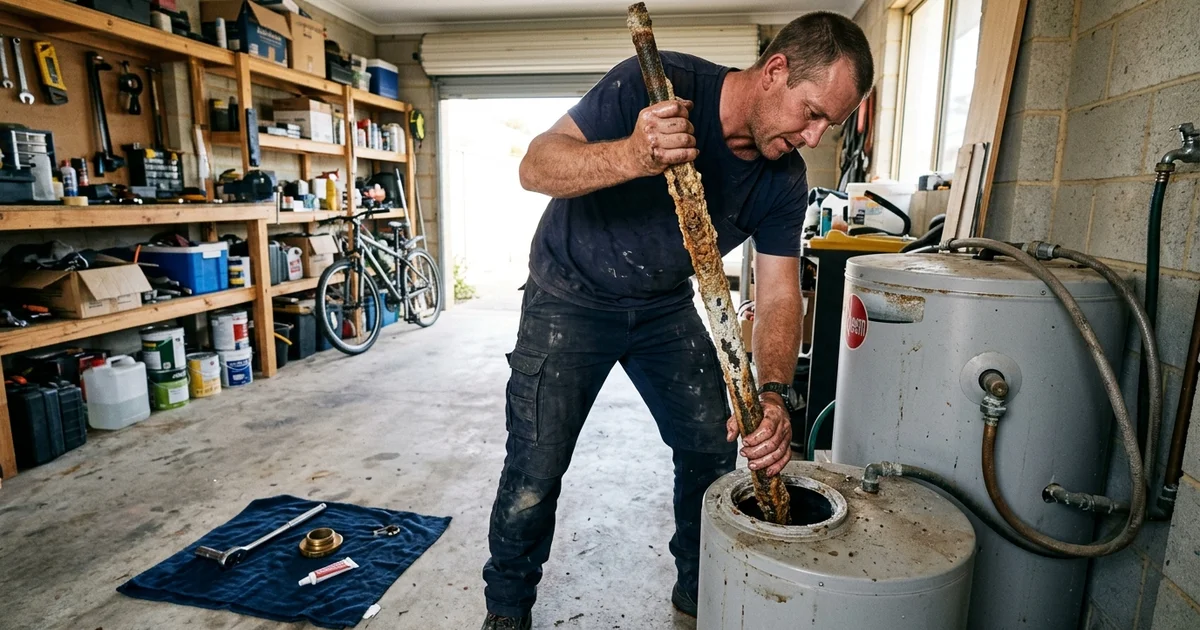
Inside almost every storage hot water tank there is a metal rod, usually magnesium or aluminium, threaded into the top of the cylinder and hanging down through the water. It is called a sacrificial anode, and its entire purpose is to corrode so your tank does not.
The chemistry is straightforward. When two dissimilar metals sit in water together, the more reactive one corrodes preferentially. The anode is deliberately made from a metal more reactive than the steel of the cylinder, so the corrosive activity in the water attacks the rod instead of the tank wall. The rod is consumed slowly over years, and while there is anode left, the steel is protected.
That is the whole system. It works well, it is cheap, and it is almost entirely invisible until it stops working.
Once the anode is fully consumed, the protection ends. The corrosion has to go somewhere, and the only remaining target is the cylinder itself. From that point the tank is corroding from the inside, and the clock is running — which is where the signs your hot water system needs replacing start showing up.
Why this matters more in Perth
Perth’s mains water carries enough dissolved mineral content to be considered moderately hard in much of the metro, and harder again in some areas. That has two effects on hot water systems.
The first is scale. Dissolved minerals precipitate out when water is heated, and they deposit on the hottest surface available, which is the heating element. Scale insulates the element from the water, so it runs hotter and works longer to reach temperature. That shortens element life and costs you energy. It also settles as sediment in the base of the tank, taking up volume and insulating the lower element on dual-element units.
The second is anode consumption. Harder water is more electrically conductive, which accelerates the sacrificial process. The manufacturer’s suggested replacement interval usually assumes conditions softer than a lot of Perth. It is why we see so many tanks here reaching the end of their life at eight to ten years when the same model elsewhere runs to fifteen.
Neither of these is a reason for alarm. They are reasons for maintenance, and the maintenance is cheap.
The warning signs your anode is gone
Rusty or discoloured hot water. The clearest sign. If brown or metallic-looking water comes out of the hot tap and clears when you run the cold, the corrosion is inside your tank. This appears once the anode can no longer protect the cylinder.
A metallic or eggy smell. Sometimes a depleted anode, sometimes a bacterial reaction with the anode metal. Either way it is worth investigating.
Visible corrosion or staining at the tank base. Corrosion works from the inside out, so external staining usually means it has been progressing internally for a while.
Age alone. If your tank is over five years old and nobody has ever mentioned the anode, assume it needs checking. Most homeowners have never had one replaced because nobody told them it existed.
When and how it gets replaced
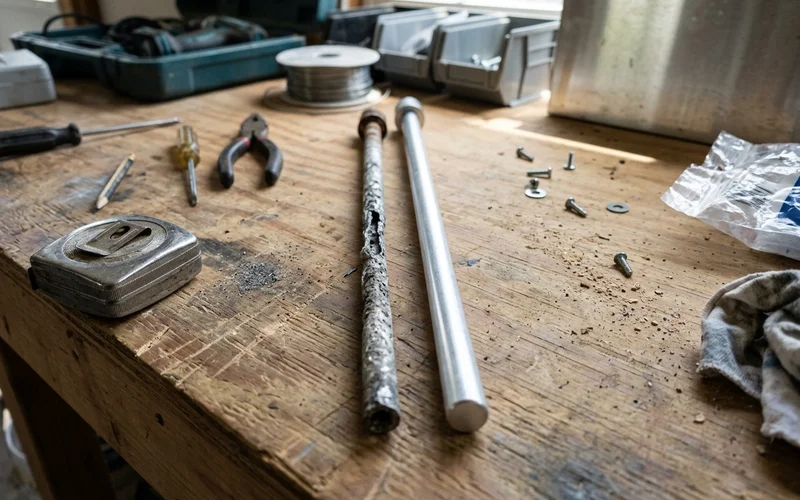
Checking the anode is a routine part of a proper hot water service. The plumber isolates the system, relieves pressure, removes the anode plug from the top of the tank, and withdraws the rod. What comes out tells the story immediately: a healthy rod still has substantial material on it, a spent one is a thin wire or a few remnants on the core.
Replacement is quick where there is headroom above the tank. In tight installations, particularly units tucked under eaves or in narrow side setbacks, a flexible segmented anode can be used where a rigid rod will not clear.
The cost of an anode replacement is a small fraction of the cost of a new tank. That is the entire argument for doing it. A rod fitted at year five and again at year ten can realistically add years to a cylinder that would otherwise have failed early, and it is the cheapest preventative work available on any storage system.
While we are in there, we also flush sediment from the base and check the pressure temperature relief valve, both of which affect efficiency and safety.
What to do next
If you have a storage tank over five years old and no record of anode replacement, book a service and ask specifically for the anode to be checked. It applies to electric hot water systems, gas storage, and the tanks on solar systems equally, since all of them are steel cylinders holding heated water.
If you are already seeing rusty hot water, act sooner rather than later. That symptom usually arrives when the tank has begun corroding, and the next stage is a leak from the base seam, which is not repairable. If water is already appearing under the unit, treat it as urgent and contact our emergency hot water repairs team, since a base leak worsens rather than stabilises.