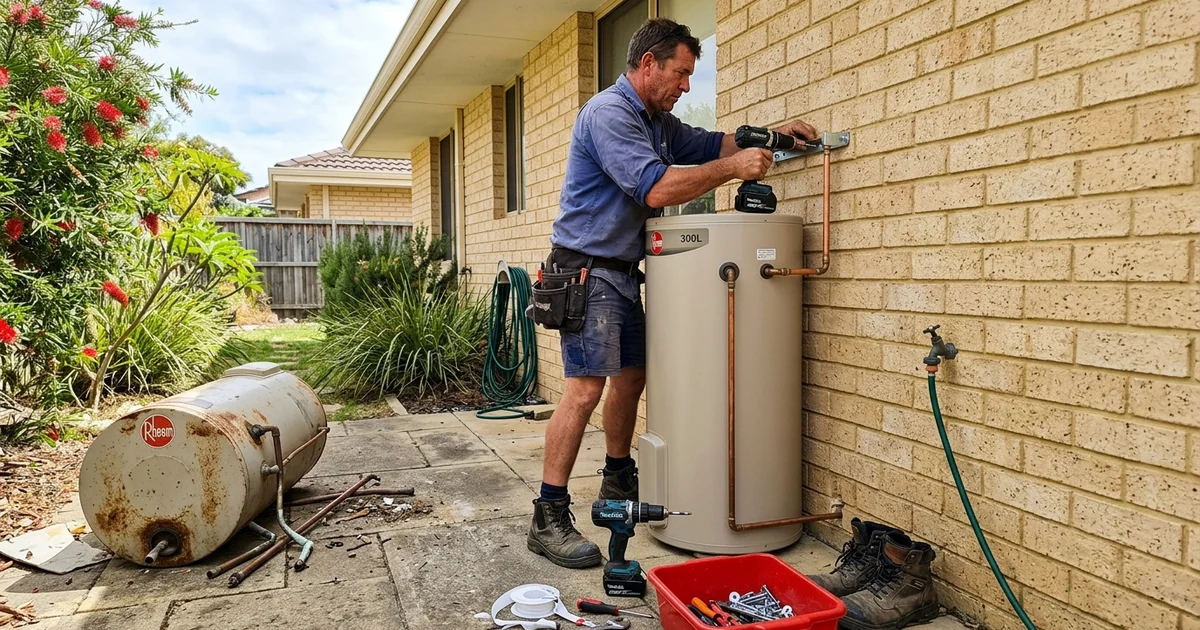
Before the day: the site assessment
Nothing useful can be quoted over the phone, so every hot water system installation starts with someone coming out to look.
We check the existing unit’s make, model and age from the compliance plate, then look at the available space and clearances where the new one will sit. We confirm what supply you actually have: mains natural gas or LPG, the electrical circuit and its rating, and whether the existing pipework and valves are worth keeping.
Then we talk about demand. How many people, how many bathrooms, whether showers overlap, whether a bath gets filled regularly. That determines capacity, and capacity is the decision you live with for a decade.
From there you get a written quote covering the unit by brand and model, all labour and materials, removal and recycling of the old cylinder, compliance certification, and the federal STC rebate already deducted where the system is eligible. Nothing is ordered or started until you approve it.
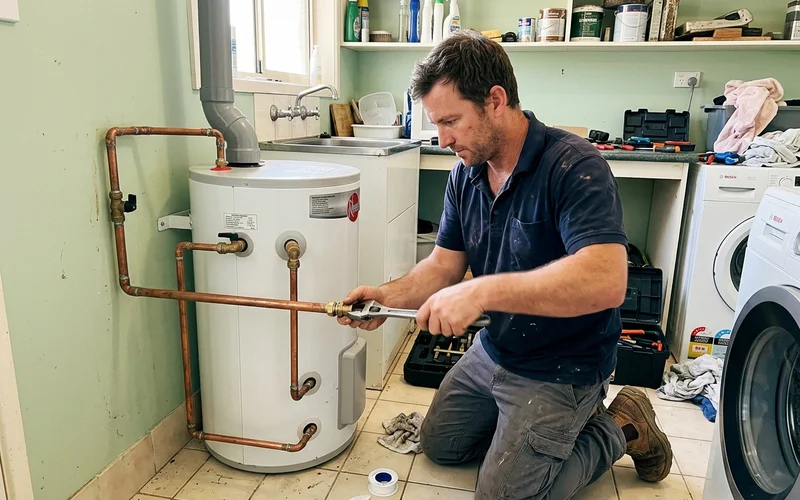
On the day: the sequence
Arrival and setup. We confirm the plan, lay drop sheets where we are working inside, and identify the isolation points before touching anything.
Isolate and drain. The cold water supply to the unit is closed, and power or gas is isolated. A full storage tank then has to drain, which takes time proportional to its size. A 315 litre tank does not empty in five minutes.
Remove the old unit. The old cylinder is disconnected and carried out. In tight Perth side setbacks that sometimes means walking it out on its side, which is a genuine skill. It goes on the ute for metal recycling, covered in more detail in our guide on old hot water tank removal.
Prepare the position. The base is levelled, a pad laid or checked if needed, and mounting brackets fixed for wall-hung units. Heat pumps get their condensate drain route set up here.
Position and secure the new unit. Set, levelled and strapped or bracketed as required. This step matters more than it looks. A tank that is not level ages badly and drains poorly.
Make the connections. Water in and out, then gas by a licensed gas fitter where applicable, or the electrical connection where required. New isolation valves and flexible connections are fitted, since reusing thirteen-year-old ones is false economy.
Tempering valve. Fitted or replaced as required so hot water delivers at a maximum of 50C to bathroom outlets, which is a WA requirement under AS/NZS 3500.4.
Fill, purge and commission. The system is filled slowly, air purged from the lines, and then fired up. On gas, combustion and flueing are checked. On heat pumps, the timer is set, ideally to run during the warmest part of the day or your solar generation window.
Test and hand over. We check delivery temperature at an outlet with a thermometer rather than by hand, test the pressure temperature relief valve, walk you through the controls, and issue the compliance certificate.
Timeframes, realistically
| Job type | Typical duration | Water off |
|---|---|---|
| Like-for-like storage swap | 2 - 4 hours | About 2 hours |
| Storage to continuous flow gas | 4 - 6 hours | 2 - 3 hours |
| Electric storage to heat pump | 4 - 6 hours | 2 - 3 hours |
| Solar system installation | Most of a day, sometimes two | Half a day |
| Unit relocation | Add 2 - 4 hours | Longer, site dependent |
The water-off period is shorter than the total job because much of the time is removal, positioning and connection work that happens with the supply already isolated at the unit rather than at the house main.
Worth knowing before the day
Clear access to the unit saves real time. If the side passage is full of bikes and bins, or the tank is behind a locked gate, that all comes out of the working window.
After the install
You should end up with a compliance certificate, the manufacturer’s documentation, and a clear explanation of the controls. Keep the certificate. It matters for warranty claims and it comes up at sale.
The one piece of ongoing maintenance worth diarising is the sacrificial anode rod on any storage system. In Perth’s harder water, checking it around every five years genuinely extends tank life.
For a full picture of what our installations include, including sizing, brands and pricing, see our hot water system installation page.