The honest version
Plenty of after-hours plumbing calls do not need to be after-hours calls. We would rather tell you that on the phone than send a vehicle out and charge you a premium for something that could have been done at 9am for less.
So here is the decision framework we use, laid out plainly.
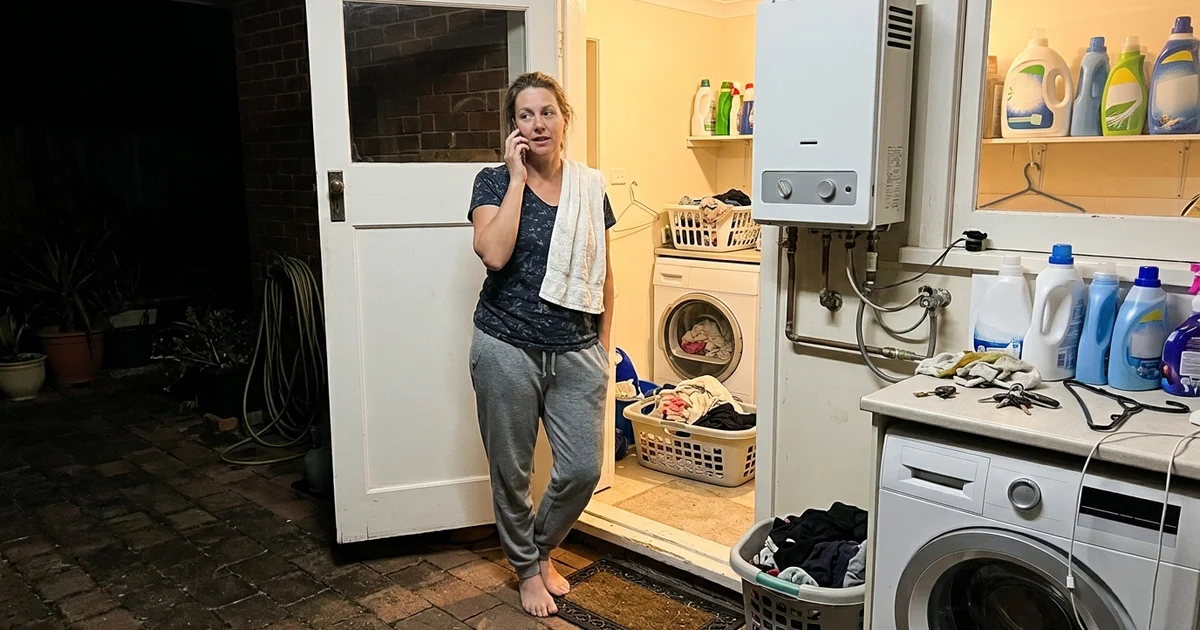
Call now, whatever the hour
Water is actively escaping. A leaking or burst tank does not stabilise overnight. The cylinder keeps refilling from the mains and the leak keeps feeding itself. Eight hours of water running through a side passage, under a wall or across a garage floor will cost you far more than the after-hours premium. Isolate the cold water valve and call.
Any smell of gas. This is not a hot water question, it is a safety one. Turn the gas off at the meter, do not operate light switches, open doors and windows, get everyone outside, and call from outside the property.
No water at all. If cold taps are dry too, the problem is not your hot water system and it needs attention now.
Water is dangerously hot at outlets. A failed tempering valve delivering stored water at 60C or above creates a real scald risk, particularly with children in the house. Water at 60C causes a serious scald in about five seconds.
A breaker that trips repeatedly. Reset once. If it trips again immediately, stop resetting it and call. A shorted element drawing fault current is not something to keep re-energising.
Usually fine to wait until morning
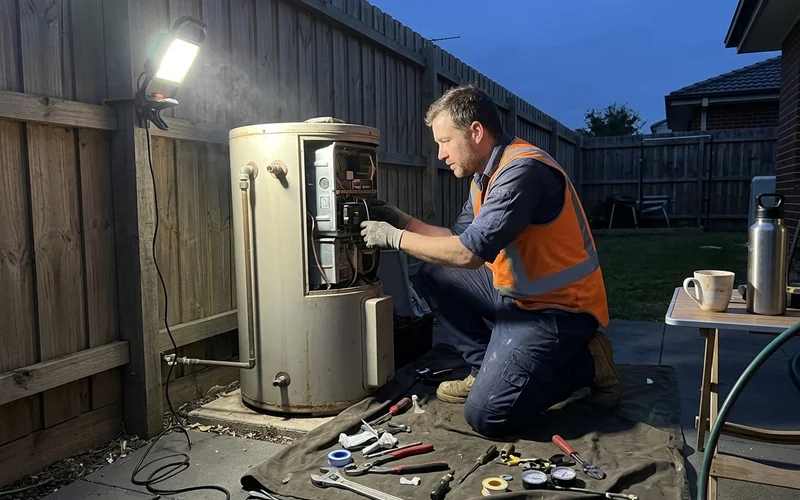
No hot water, nothing leaking, no gas smell. Miserable, not dangerous. A cold shower or a kettle gets you through, and a morning booking costs less. Nothing about the fault worsens overnight.
Lukewarm water. Points at a failed element on a dual-element tank, a drifting thermostat or a tempering valve. None of those deteriorate meaningfully in eight hours.
A pilot light that will not relight. Provided nothing is leaking and there is no gas smell, turn the gas off at the unit and deal with it in the morning.
Hot water running out faster than usual. A capacity or sediment issue. Book it properly rather than at 11pm.
Minor drip from the pressure relief valve. Some discharge from a PTR valve during heating is normal. A continuous stream is not, but it can generally wait for a morning booking unless the volume is significant.
What after-hours actually costs
After-hours rates can apply outside standard operating hours. That is the case with essentially every trade, and the reason is straightforward: someone is being woken up or kept back.
What matters is transparency. We confirm the price with you before work starts, so there is no surprise on the invoice. If you call at 10pm about a fault that can safely wait, we will tell you that and book you for the morning rather than dispatching a vehicle.
Our standard hours are Monday to Friday 7am to 6pm, Saturday 9am to 4pm and Sunday 9am to 3pm, with 24/7 dispatch for genuine emergencies. Weekend daytime calls fall within standard hours, which surprises some people.
What to do while you wait, either way
If you have decided to wait until morning:
- Turn off the power or gas to the unit if it is faulting
- Close the cold water isolation valve if there is any leakage at all
- Find and note the brand, model and age from the compliance plate
- Clear access to the unit so the morning visit is efficient
If you are calling now:
- Isolate water and energy first, then call
- Stay clear of any escaping water, which can remain scalding for a long time
- Move belongings out of the water’s path
- Photograph the situation before cleaning up, in case of an insurance claim
The middle ground
There is a third option people forget: call now, book for the morning. You get advice on the phone about whether to isolate anything, a slot locked in for first thing, and the peace of mind of having spoken to someone who knows what the symptom means.
Our emergency hot water repairs line runs 24/7 across the Perth metro for exactly this reason. If your situation involves water under the unit, read our guide on what a leak from the bottom means first, because that one really does not wait.